
Our Team.
Dr. Ramjit is a Neurodevelopmental Disabilities resident at Indiana University’s Riley’s Children’s Hospital. She founded BrainIACS in 2025 with the mentorship of Dr. Delima and a team of Indiana University Medical Students.

Dr. Laxhmi Ramjit
Neurodevelopmental Disabilities PGY4
Hi, I’m Dr. Laxhmi Ashlee Ramjit, a Neurodevelopmental Disabilities physician at Riley Children’s Hospital and Indiana University School of Medicine, and the founder of BrainIACS.
BrainIACS was shaped by both lived experience and global health principles. I grew up in a Caribbean family with limited access to formal education. My father was born and raised in Guyana, and my mother in Jamaica. Both grew up speaking Caribbean English Creole—a rich, adaptive linguistic tradition that reflects history, resilience, and community, but is often mischaracterized or undervalued within formal healthcare and educational systems. I am now the first physician in my family.
In my clinical work today, I see these same challenges reflected in families navigating complex healthcare systems—families who are deeply invested in their children’s care, yet leave encounters overwhelmed by information that was not communicated in a culturally responsive or accessible way. Across settings—locally and globally—health inequities are often driven not by lack of engagement, but by gaps in health literacy, language access, and trust. In neurology, where conditions are complex and often lifelong, these gaps can profoundly shape outcomes.
I created BrainIACS to address these barriers through a community-engaged, education-first approach. My approach to medicine is grounded in disability-affirming, trauma-informed care and the belief that health literacy is a core component of global health equity. My work prioritizes cultural humility, accessibility, and sustainability, recognizing that meaningful health education must be locally relevant and responsive to real-world contexts. BrainIACS reflects my commitment to bidirectional learning, community partnership, and building trust as foundational elements of neurological care—across borders, cultures, and health systems.
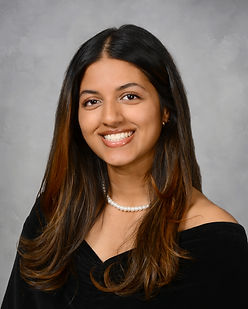
Hi, I’m Sravani Ravipati, a first-year medical student at IUSM from Evansville, IN with an interest in anesthesiology and a strong commitment to community health. I’m passionate about BrainIACs because it creates space for conversations about brain health and pain that don’t usually happen in classrooms or clinics. I’ve learned that when people are given clear, accessible information, they feel more confident advocating for themselves and their families, and that belief strongly shapes how I approach medicine. BrainIACs gives me the opportunity to engage with communities in a way that feels personal and impactful, whether that’s through education, discussion, or in-person connection. It allows me to connect my interest in community health with a broader focus on health literacy and trust-building, especially in underserved populations. Being part of a team that values curiosity, accessibility, and human connection is what makes this work meaningful to me.
Sravani Ravipati
MS2

Hi, my name is Taylor Smith, and I am a first-year medical student at Indiana University School of Medicine with a strong interest in pursuing pediatrics. Prior to medical school, I worked as a respite care provider for children and adults with autism, many of whom also had a diagnosis of epilepsy. Through this experience, I saw firsthand the importance of education and clear communication in shaping health outcomes—not only for the child, but for caregivers and the family as a whole. These experiences have reinforced my passion for patient- and family-centered care and my commitment to improving health literacy. I am especially drawn to BrainIACS because of its mission to bridge gaps in health education and empower communities with the knowledge and resources needed to support health and quality of life.